
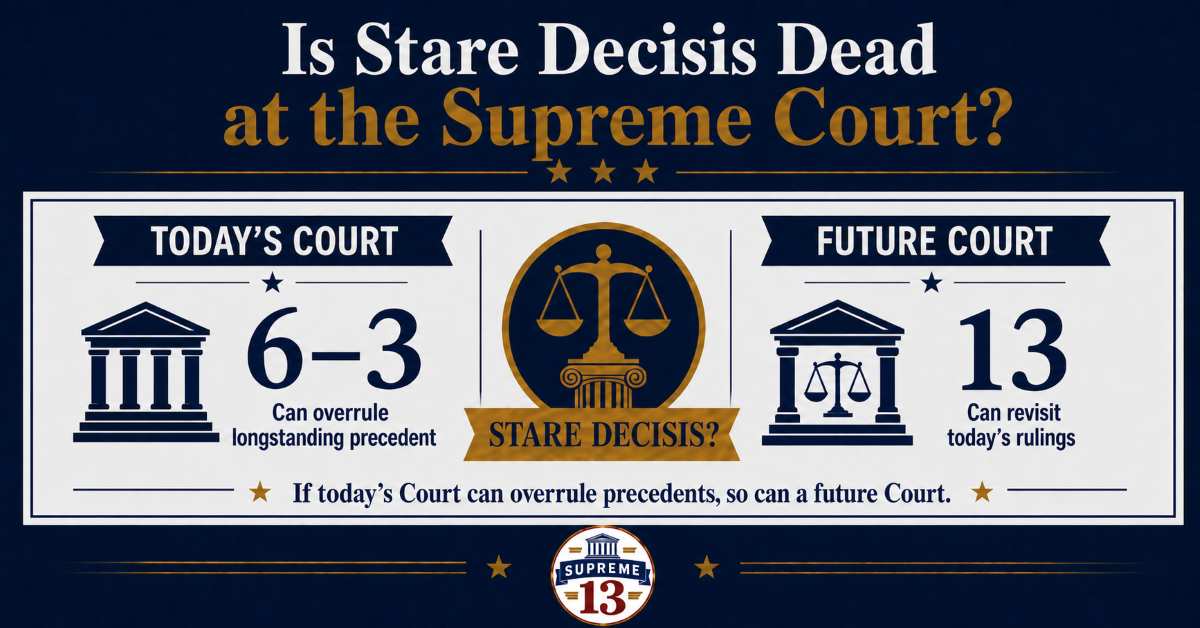
Stare Decisis—a Latin term that means “let the decision stand” or “to stand by things decided”—is a foundational concept in the American legal system. To put it simply, stare decisis holds that courts and judges should honor “precedent”—or the decisions, rulings, and opinions from prior cases. Respect for precedents gives the law consistency and makes interpretations of the law more predictable—and less seemingly random.
Understanding Stare Decisis, ABA Supreme Court Preview (December 23, 2022).
Stare decisis is intended to promote stability, continuity, and public confidence in the legal system. Of course, most Americans now agree that decisions such as Plessy v. Ferguson were profoundly wrong, left a stain on the nation's history, and were rightly overruled. But in recent years, the Supreme Court has overruled longstanding precedents not because they had become unworkable, but because a new majority concluded they were wrongly decided.
During the past decade, the court’s reconsideration of constitutional constructs has shown that stare decisis is much less dependable than we thought. As members of the Supreme Court have been replaced, the scope of constitutional rights and privileges has changed. No longer does the principle of stare decisis—capturing the idea that past decisions deserve respect and should direct the forces of change away from the courts and toward the domains of politics—govern new decisions.
U.S. Supreme Court and the Elimination of Stare Decisis, Larry E. Cohen, The Legal Intelligencer (May 22, 2026)
Cases such as Humphrey's Executor v. United States (1935), Roe v. Wade (1973), and Chevron U.S.A., Inc. v. Natural Resources Defense Council, Inc. (1984) have given way to Trump v. Slaughter (2026), Dobbs v. Jackson Women's Health Organization (2022), and Loper Bright Enterprises v. Raimondo (2024).
Notice the years of those cases. The Constitution and relevant statutes had not changed. The people interpreting them had.
If stare decisis is no longer a consistently applied principle at the Supreme Court, then why should this Court's opinions be regarded as untouchable precedent by a future Court with a different judicial philosophy? The answer is simple: they should not.
Progressives should not treat stare decisis as a one-way constraint. If the current Court has demonstrated that precedent may be overruled when a majority believes it was wrongly decided, then a future 13-justice Court is equally entitled to revisit the opinions of today. The principle that has been weakened by this Court may ultimately provide the means to reverse what many will regard as its own wrongly decided opinions.
Comments
Join the conversation on Bluesky
Stare decisis is intended to promote stability, continuity, and public confidence in the legal system. But in recent years the Court has overruled major longstanding precedents after changes in the Court's membership and judicial philosophy.
Roe gave way to Dobbs. Chevron gave way to Loper Bright. Humphrey's Executor gave way to Trump v. Slaughter. The Constitution and relevant statutes had not changed. The people interpreting them had.
That raises the question at the heart of the article: if today's majority can revisit precedent because it believes earlier cases were wrongly decided, why should a future Court treat today's decisions as untouchable?